
是淡水河流与陆地的过渡生态系统,以珠江流域亚热带气候为适配具有生态枢纽作用,栖息地价值,以及地域适配性等特点 居民以水鸟,两栖动物,淡水鱼类为主
It is a transitional ecosystem between freshwater rivers and land, adapted to the subtropical climate of the Pearl River Basin, featuring ecological hub role, habitat value, and regional adaptability. The residents mainly consist of waterfowl, amphibians, and freshwater fish
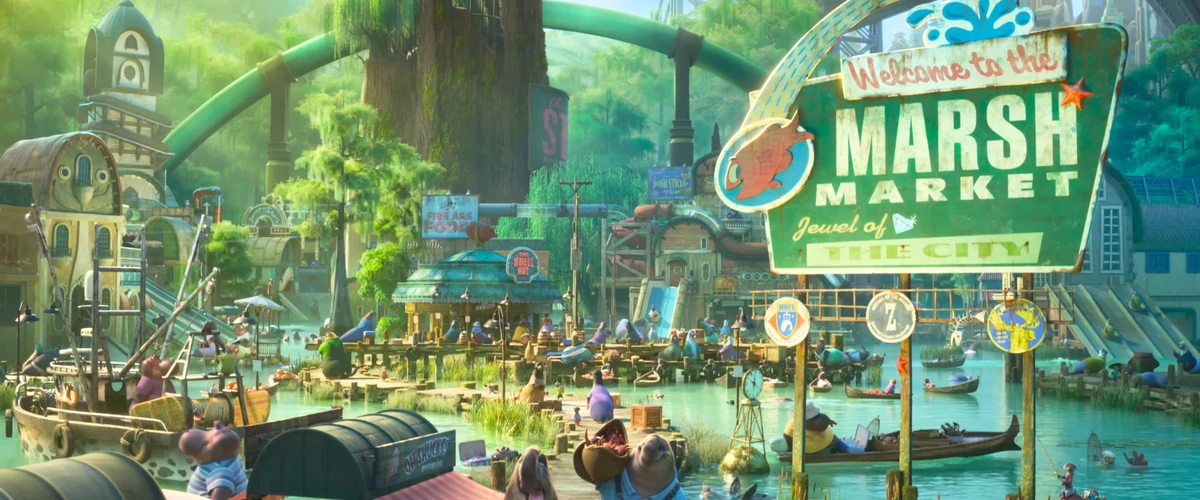
图片来自电影《疯狂动物城2》
指导老师 Supervisor : 每一天都要喝三杯咖啡的水獭科林(Colin Wang)
组长 Team Leader : 长腿夜鹭炒肉丝先生(Charles Chen)
组员 Team Member:梅花鹿小姐瑞威尔 (Reval Lin) , 冰块小姐艾斯 (Icey Luo) , 石头先生 (Rocky)
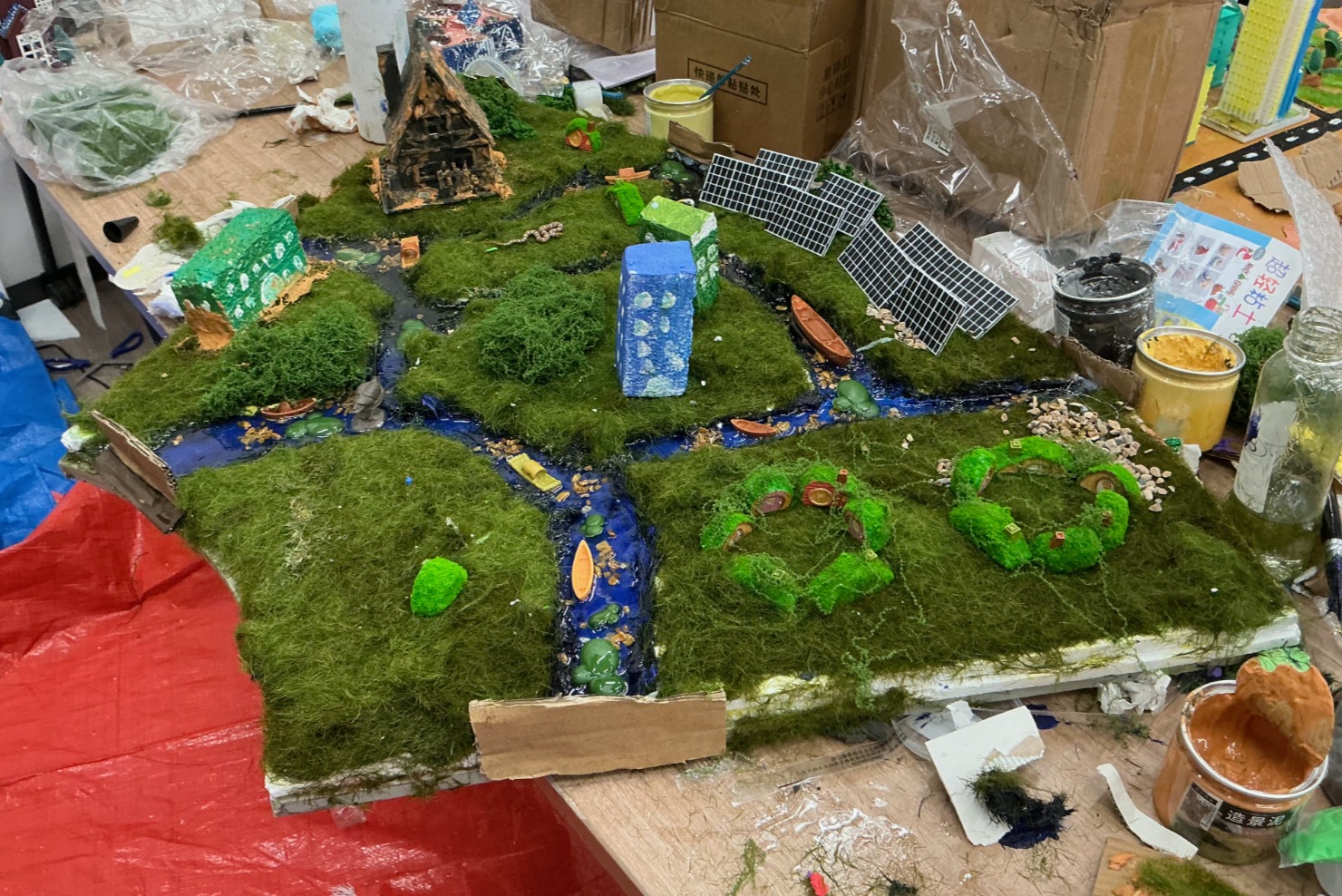
欢迎来探索更多有关于河川湿地的更多秘密🤫
Welcome to Explore More About Canal District🤫
本网站由中央城区岩石大法官和萨利检察官共同完成开发
This website is designed and created by Rock Lee and Sally Liu
水域(中心生态主轴)/ Water area (Central ecological axis)
位于城市中部,呈带状展开,连接上下游湿地
It is located in the middle of the city, spreading out in a band and connecting the upstream and downstream wetlands.
作为城市生态与景观核心,提供水体调节、生物栖息、雨水管理等服务
As the core of urban ecology and landscape, it provides services such as water body regulation, biological habitat, and rainwater management.
沿岸设置步道、观鸟平台、生态教育节点
Set up trails, bird-watching platforms and ecological education nodes along the coast
野外地带动植物(生态缓冲区)/ Wild area flora and fauna (ecological buffer zone)
紧邻水域两侧,形成连续的湿地与林地斑块
Adjacent to both sides of the water area, continuous patches of wetland and forest land are formed.
禁止高强度开发,仅允许生态监测、科研与轻度游览
High-intensity development is prohibited. Only ecological monitoring, scientific research and light Tours are allowed.
是城市与自然之间的过渡带
It is the transitional zone between the city and nature.
养殖场(近水生产区)/ Breeding farm (near aquatic production area)
布置在水域下游或侧支流区域,便于取水与排水管理
It is arranged downstream of the water body or in the area of a side tributary to facilitate water intake and drainage management.
与居民区保持适当距离,但通过生态沟渠隔离
Keep an appropriate distance from residential areas, but be isolated by ecological ditches.
强调循环水养殖与湿地净化结合
Emphasize the combination of recirculating water aquaculture and wetland purification.
居民区(近郊生活组团)/ Residential area (suburban living cluster)
位于湿地外侧、交通便利的缓坡地带
It is located on a gentle slope outside the wetland with convenient transportation.
住宅组团围绕小水系或湿地公园布置
Residential clusters are arranged around small water systems or wetland parks.
强调慢行系统与水岸连接
Emphasize the connection between the slow traffic system and the waterfront.
河川监管局 / River Supervision Bureau
位于高地或水域交汇处,可俯瞰主要湿地与功能区域
Located at the junction of highlands or water areas It overlooks the main wetlands and functional areas.
承担水质监测、生态巡查、城市运行协调等职能
It undertakes functions such as water quality monitoring, ecological inspection, and urban operation coordination.
类似“生态城市指挥中心”
It is similar to an "ecological city command center"
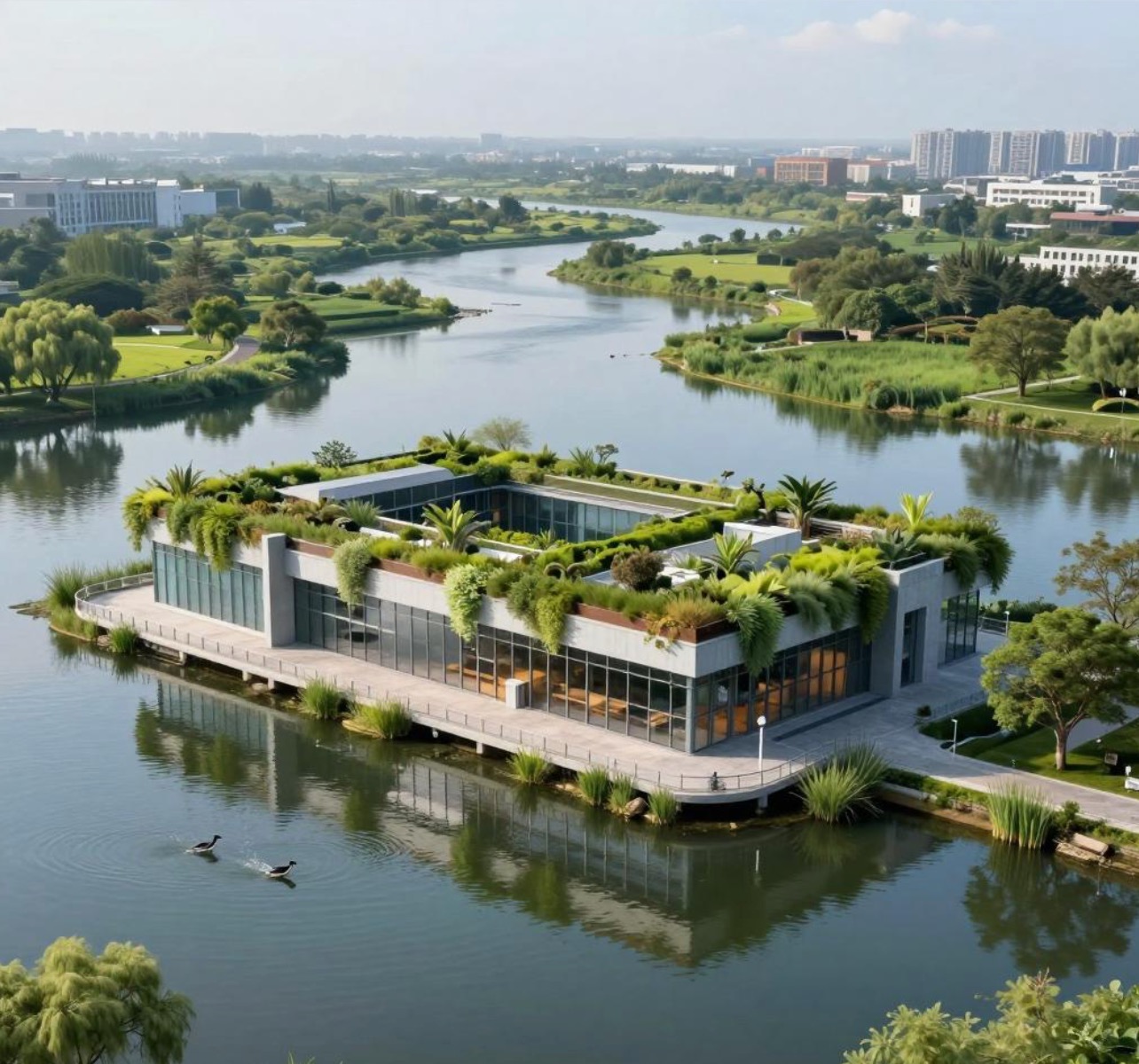
河川沼泽娱乐区 / The River and Marsh Entertainment Area
位于水域与居民区之间的开阔地带
The River and Marsh Entertainment Area is located in an open area between water and residential areas.
包括水上剧场、湿地公园、滨水商业街、文化中心
It includes a water theater, a wetland park, a waterfront commercial street, and a cultural center.
是市民休闲与游客聚集的主要区域
It is the main area for citizens to relax and for tourists to gather.
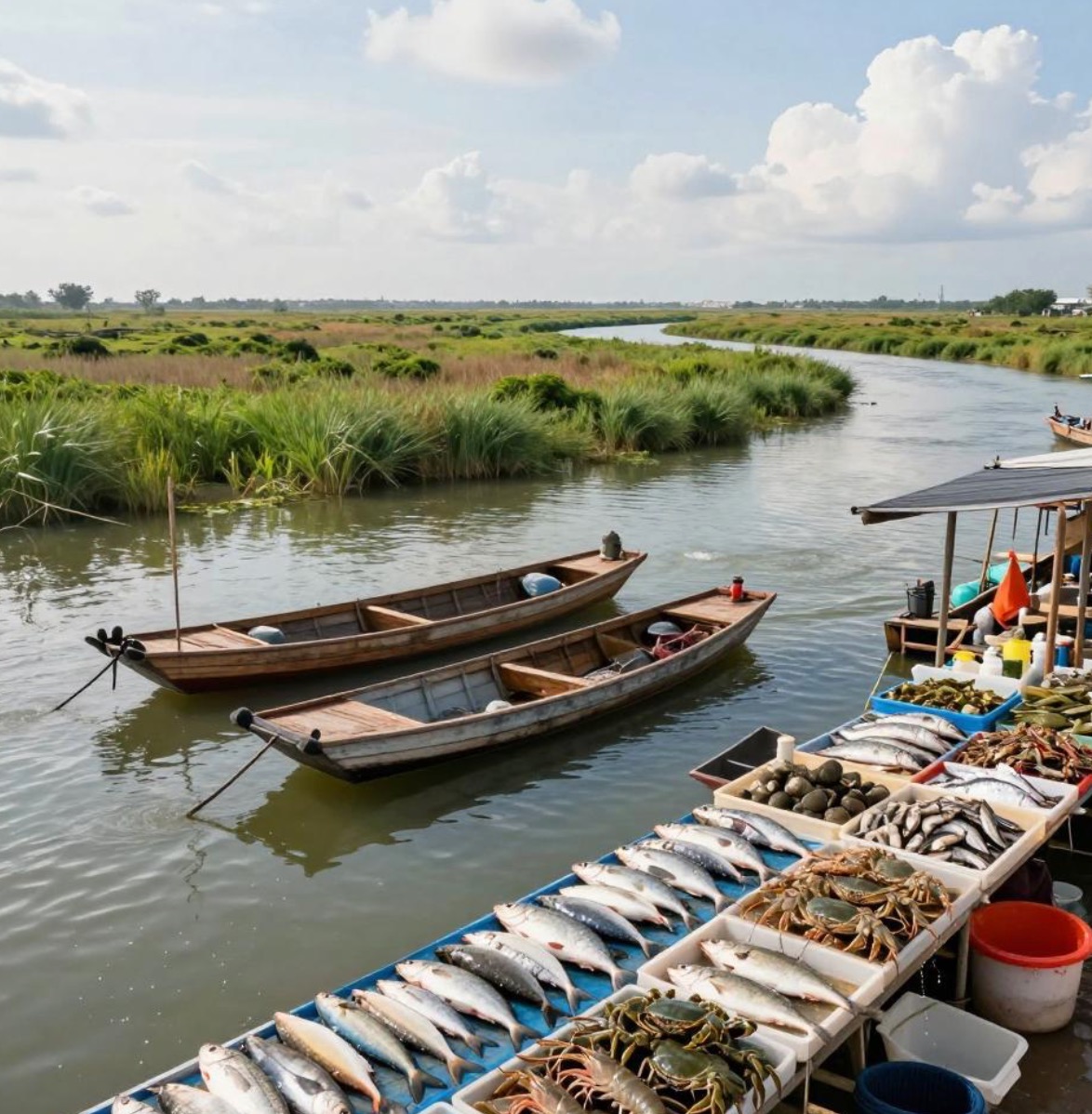
河川市场 / River Market
靠近养殖场与主要交通干道
The River Market is close to the livestock farm and major traffic arteries.
承担本地水产品、湿地农产品的集散与运输
Undertake the collection, distribution and transportation of local aquatic products and wetland agricultural products.
承担本地水产品、湿地农产品的集散与运输
Directly connect with transportation routes to reduce transportation costs.
核心困难 / Core Difficulties
1, 建筑密集 → 热岛效应 → 湿地蒸发降温能力下降
Dense buildings → Heat island effect → Reduced evaporation and cooling capacity of wetlands
2, 能源消耗大 → 碳排放 → 加剧区域气候异常
High energy consumption → Carbon emissions → Exacerbated regional climate anomalies
3, 河流流速、水温改变 → 影响水生生物生存
Changes in river flow rate and water temperature → Affect the survival of aquatic organisms
解决方案 / Solution
1,热学与热岛缓解 / Thermology and heat island mitigation
城市热岛效应的核心,是人工下垫面(沥青、混凝土)大量吸收太阳辐射,同时湿地等自然冷却空间被侵占,导致城市温度显著高于周边区域。我们从「源头减热 + 过程降温」双维度破解:源头减热:高反照率路面技术:我们采用高反照率的新型路面材料,大幅提升路面对太阳短波辐射的反射率,减少路面吸收的热量,从源头上降低城市下垫面的升温幅度,从根本上削弱热岛效应的驱动力。过程降温:湿地蒸发冷却系统:我们保留大面积的湿地水面与植被,利用水的蒸发潜热效应 —— 水分蒸发时会吸收大量的环境热量,相当于给城市安装了天然的「空调系统」,同时湿地植被的蒸腾作用也能进一步降温增湿,打造舒适的城市微气候。
The core of the urban heat island effect is that artificial underlying surfaces (asphalt, concrete) absorb a large amount of solar radiation, while natural cooling Spaces such as wetlands are occupied, resulting in a significantly higher urban temperature than the surrounding areas. We solve the problem from two dimensions: "source heat reduction + process cooling" : Source heat reduction: High albedo pavement technology: We use new pavement materials with high albedo to significantly increase the pavement's reflectivity to short-wave solar radiation, reduce the heat absorbed by the pavement, and lower the temperature rise of the urban underlying pavement from the source, fundamentally weakening the driving force of the heat island effect. Process cooling: Wetland evaporative cooling System: We retain a large area of wetland water surface and vegetation. By taking advantage of the latent heat effect of water evaporation - when water evaporates, it absorbs a large amount of environmental heat, which is equivalent to installing a natural "air conditioning system" for the city. At the same time, the transpiration of wetland vegetation can further cool and increase humidity, creating a comfortable urban microclimate.
2,可再生能源 / renewable energy
我们完全摒弃化石能源,依托广州的自然禀赋,打造「潮汐能 + 太阳能」的双可再生能源体系,实现城市能源的自给自足:分布式太阳能光伏:我们在居民区、娱乐区、市场等建筑的屋顶,全面铺设光伏发电站,依托广州充足的亚热带日照资源,将太阳能直接转化为电能,为城市提供高峰时段的补充能源,同时实现建筑的零碳供能,打造真正的零碳城市。
We completely abandon fossil energy and rely on Guangzhou's natural endowment to build a dual renewable energy system of "tidal energy + solar energy", achieving self-sufficiency in urban energy: Distributed solar photovoltaic We have comprehensively installed photovoltaic power stations on the rooftops of buildings in residential areas, entertainment areas, markets, etc. Relying on Guangzhou's abundant subtropical sunlight resources, we directly convert solar energy into electricity, providing supplementary energy for the city during peak hours. At the same time, we achieve zero-carbon energy supply for buildings and create a truly zero-carbon city.
3. 富营养化控制(N、P 去除)
水体富营养化的本质,是氮、磷等营养盐过量输入,导致藻类爆发性繁殖,消耗水体溶解氧,最终形成缺氧死水区,破坏湿地生态。我们采用「化学沉淀 + 生物脱氮」的组合工艺,从源头和过程双重控污:化学沉淀法除磷:我们利用铁盐、铝盐等金属盐,与水体中的磷酸根离子发生化学反应,生成难溶的磷酸铁、磷酸铝沉淀,通过沉降从水体中分离,从源头大幅降低总磷浓度,从根本上切断藻类生长的营养源。
生物脱氮(硝化 + 反硝化):我们构建人工湿地的好氧 - 厌氧复合环境,利用微生物的代谢作用实现氮的去除:好氧阶段:硝化细菌将水体中的氨氮逐步氧化为亚硝酸盐,最终转化为硝酸盐 厌氧阶段:反硝化细菌将硝酸盐还原为氮气,直接释放到大气中,彻底去除水体中的氮污染。 这套方案既高效又环保,能长期维持湿地水质稳定,杜绝水华、赤潮的发生。
The essence of water eutrophication is the excessive input of nutrients such as nitrogen and phosphorus, which leads to the explosive reproduction of algae, consumes the dissolved oxygen in the water body, and eventually forms anoxic dead water areas, destroying the wetland ecosystem. We adopt a combined process of "chemical precipitation + biological denitrification" to control pollution from both the source and the process: Chemical precipitation for phosphorus removal: We utilize metal salts such as iron salts and aluminum salts to undergo chemical reactions with phosphate ions in water bodies, generating insoluble precipitates of iron phosphate and aluminum phosphate. These precipitates are separated from the water through sedimentation, significantly reducing the total phosphorus concentration from the source and fundamentally cutting off the nutrient supply for algae growth.
Biological nitrogen removal (nitrification + denitrification) : We construct an aerobic-anaerobic complex environment in artificial wetlands, utilizing the metabolic activities of microorganisms to achieve nitrogen removal: Aerobic stage: Nitrifying bacteria gradually oxidize ammonia nitrogen in the water to nitrite, and eventually convert it into nitrate. Anaerobic stage: Denitrifying bacteria reduce nitrate to nitrogen gas and directly release it into the atmosphere, completely removing nitrogen pollution from water bodies. This solution is both efficient and environmentally friendly. It can maintain the stability of wetland water quality for a long time and prevent the occurrence of algal blooms and red tides.
交通网络 Transportation Networks
交通网络多以河道为主
The transportation network is mainly composed of rivers